


For hospitals operating in a war zone, predictability is a luxury. When the severity of a situation can change in an instant, it’s vital doctors and other healthcare workers can rely on their lifesaving equipment, no matter what’s going on around them.
In Ukraine, hospitals across the country face destroyed infrastructure and broken supply chains. Staff are working under conditions most healthcare systems never have to contemplate. In this difficult environment, dependable cold storage solutions are vital to keep medicines and other products safe.
Vestfrost Solutions has been developing trusted refrigeration equipment for healthcare facilities for over 30 years. We know what it takes to keep medicines, vaccines, and other products at consistent temperatures in highly demanding environments.
More than this, we share a vision where critical equipment is accessible and available to those who need it most. With our role in supporting healthcare systems around the world, we believe that Vestfrost has a responsibility to support initiatives that make this a reality. In doing so, we can help to forge relationships between international organizations and local partners that will build a stronger global network of care and cooperation.
Earlier this year, Vestfrost became involved in an important charity project to donate refrigeration and freezer units to four hospitals in Ukraine, one of which is a specialist facility for oncology, hematology, transplantology, and palliative care.
This is not Vestfrost's first involvement in Ukraine. Since the beginning of the war, the company has supplied thousands of vaccine refrigerators to facilities across the country, reflecting the scale of need created by the conflict. For this donation, however, getting equipment into an active conflict zone presented significant logistical challenges, made possible through on-the-ground logistics and local partner support.
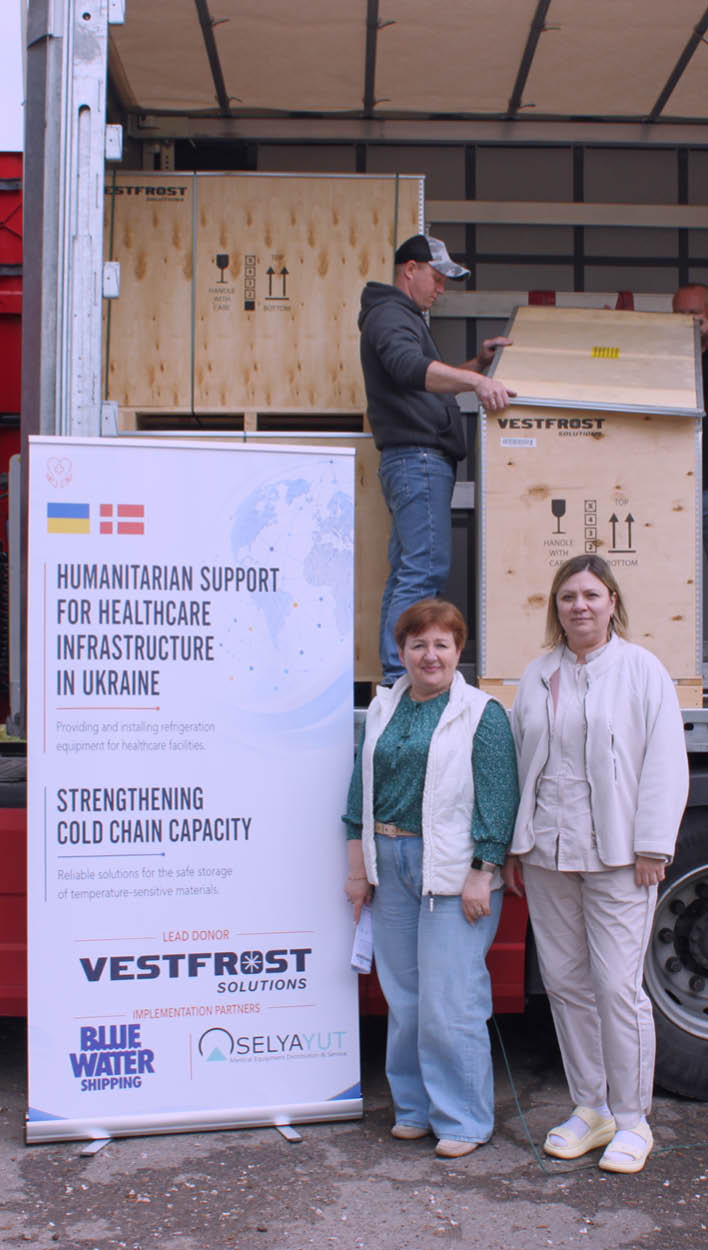
Moving refrigeration equipment into an active conflict zone is a complex challenge that takes expertise and dedication. Routes that are reliable one week may not be the next, security conditions shift, delivery windows are narrow, and the equipment itself is large, heavy, and sensitive to mishandling.
To solve this, Vestfrost worked closely with Blue Water Shipping, a specialist logistics partner with experience in complex and high-pressure environments. Blue Water Shipping successfully managed all transportation and logistics, ensuring the units reached their destinations safely despite the obstacles they faced on a daily basis.
“Our dedicated team for humanitarian aid projects are experienced in solving logistical issues in challenging environments,” said Jakob Zittlau, Head of Aid & Development Logistics at Blue Water Shipping. “From correct customs documentation to safe route planning, we were able to help keep the project and products on track.”
The project was also made possible by Oselya YUT, a local partner involved in the implementation of the cold storage units.
”With long experience in medical cold chain solutions, we wanted to support the project and make sure that the donated equipment would reach the hospitals, be installed properly, and start working as soon as possible,” said Yehor Storozhuk. ”It has been a pleasure to work together on this donation project. We highly appreciate Vestfrost’s support, openness, and practical approach.”
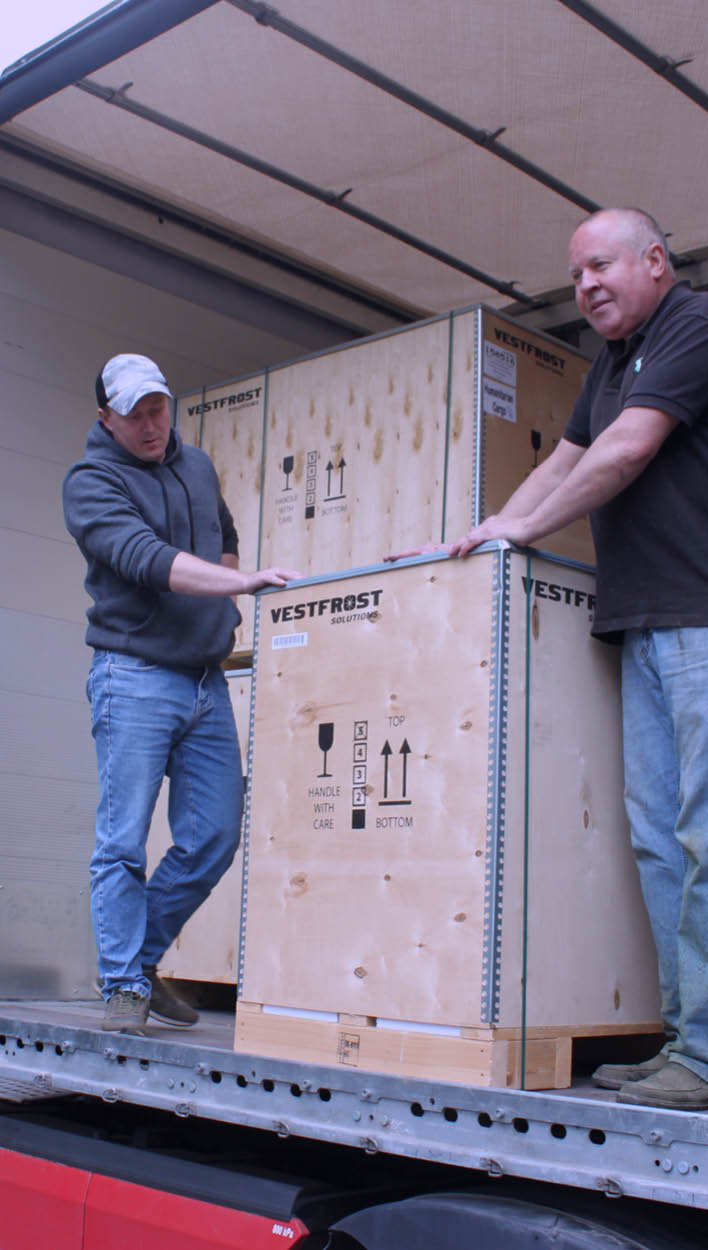
The equipment is already having a huge impact for the hospitals who received them and for the patients they care for.
One of the recipient hospitals, the Clinical Center of Oncology, Hematology, Transplantology and Palliative Care of the Cherkasy Regional Council, wrote to Vestfrost to express their appreciation. In the letter, Director Viktor Paramonov said that the donation was truly invaluable, and that it would significantly strengthen the hospital’s ability to store medicines, vaccines, and laboratory samples critical for patient care.
“For patients, the long-term value is very practical: better protected medicines and medical materials, stronger continuity of care and a higher level of safety in the treatment process,” Director Paramonov said. “The new equipment will help us improve the reliability of our internal processes and reduce risks connected with insufficient or outdated technical capacity. It will support our doctors, nurses and laboratory staff in their daily work and make hospital operations more predictable.”
“For our medical team, this equipment means greater stability in daily work and fewer technical risks,” said Grigory Bardakov, Medical Director at Chernihiv Medical Center of Modern Oncology. “For our patients, it means that the hospital can provide care using infrastructure that better supports safe and organized treatment.”
Especially in times of crisis, opportunities such as these show solidarity for our European neighbors and help those in need.
“We have been part of the backbone of global healthcare for more than 30 years,” said Robert Vergo, Senior Director Healthcare Sales at Vestfrost. “With that comes a responsibility. Access to safe healthcare should not depend on geography, and it should not stop because of a war. Supporting these hospitals is not a gesture, it is the most direct thing we can do with what we have.”
For hospitals and healthcare workers facing enormous pressure, even the smallest gestures can make a world of difference. At Vestfrost, it makes us very happy to know our efforts have contributed to something meaningful, lasting, and valuable. When lives hang in the balance, such projects are not just helpful – they are essential.
As Inna Fesenko, General Director at Chernihiv Central District Hospital, says:
“For a central district hospital, this equipment is not just an additional technical item. It strengthens our everyday ability to store vaccines, medicines and other temperature-sensitive medical products safely and reliably. In practice, this means fewer risks, better control and more confidence in the quality of care we provide. Thank you.”
“Your contribution helps us continue providing high-quality medical care even under the most challenging circumstances. Please accept our deepest appreciation for your support, partnership, and compassion,” Director Paramonov concluded.




A/S Vestfrost has developed and produced refrigeration solutions. Today, product development, production and sales focus on solutions that target business needs. Product line and sales effort are targeted at four basic market segments, which cover demanding and exciting challenges: Biomedical, Cold Chain Equipment (CCE), Wine, and Merchandising.
About










 Go Back